Americans are an ignorant lot. Though pained to state this, I believe that by-and-large Americans are pretty ignorant. Ignorance does not mean “stupid,” ignorance simply means, “uninformed.” Lest you think I am above being ignorant myself, I am not. I realize I am ignorant, though, and the more I learn the more I realize the depths of my own ignorance.
Americans are becoming more ignorant, I fear. Despite the increasing prevalence of technology in our lives, we are becoming increasingly fragmented in our knowledge. The Internet allows us entry into an enormous world of information. Sort of. Sifting for Truth on the Internet is very much like searching for a precious item in a New Jersey landfill. And, what is “Truth,” anyway. Let’s avoid that debate.
Politicians, and Corporations, deliberately or unwittingly, take advantage of our ignorance. Our lack of knowledge works to their advantage, and against ours. Also, our politicians are not immune to being ignorant or vacuous. Many of them seem to lack wisdom to truly understand dilemmas faced by the United States, especially when it comes to Unemployment, Employment, Labor, and Education.
As a result of their lack of knowledge, wisdom, or, perhaps, malevolently they hide their knowledge knowing that they can leverage the ignorance of their districts of their own benefit, politicians pander to Americans, furthering economic myths, and establish bad economic policy.
Here is an example of what I mean by saying “politicians pander.” A politician who says, “We need to bring jobs back to America,” might illicit a nice response from his constituency, and people will rally around a politician who proclaims that the “government needs to protect American jobs and punish those companies that move manufacturing to other countries.” This is pandering, potentially bad economic policy, potentially bad for America, and bear with me and I will explain why.
For this essay, my focus is manufacturing. Specifically, shoes. I am really discussing Globalization – the interconnectedness and dependence among various people, places, things, and ideas driving global development. But I want to couch my discussion of Globalization in terms of shoes.
For the record, I do not view Globalization as a good thing or bad. Guns are neither good nor bad; their use can be used for good or ill. Same as money. Money can be given to charity, or used for buying drugs, or people. Question the motives of anyone who says “globalization is _____” (bad / destructive / harmful / etc.) That person has an agenda and is distorting information for his/her own purpose.
Let’s get started.
 Nike’s international headquarters is located in Beaverton, Oregon. In 2010, Nike made $19 billion in gross profits from its different business ventures. Nike has over 30,000 employees working in 160 countries. Including their suppliers, shippers, and retailers, Nike employees over 1 million people world-wide.
Nike does not make shoes, per se. Nike designs shoes. Nike sells shoes. Nike markets shoes. Nike contracts with factories around the world to build their shoes. Nike does not own the factory. Nike simply finds a shoe factory, perhaps in Brazil, China, Viet Nam, and contracts out the job of building the shoes. Nike may help find the raw materials for building the shoes. Nike might assist in finding rubber from Malaysia. Find cotton from France, or the United States. Locate leather from Brazil or Argentina.
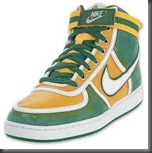 Nike does not hire the labor that works in the shoe factory. Those workers are hired from local pools of labor by the managers of that shoe factory. Those local workers need employment and are willing to work. Willing to work for $5-$10 per day. Those workers do not protest for vacation days. Generally. Those workers do not protest for health care, for dental plans, for eye care. Those workers do not protest for retirement plans. That is the fact on the ground. For the time being. We may see changes in labor in Southeast Asia over the next 5 years or so.
Yes, yes, you say, you know that. People work for 1/10th of the wages of an American. In the U.S., our Minimum Wage is $7.25 per hour. The minimum average wage in Viet Nam (2009) was $1 per hour for an 8-hour day.
Now, place yourself in the shoes of a business owner. You are going to pay the same transportation costs as your competitor. You are going to pay the same raw material costs as your competitor. Those are economic truths, not my truths. Raw materials like cotton, leather, rubber, etc. are traded on global markets. The global markets determine those prices. You and your competition, Reebok, Asics, New Balance, will be buying from the same pool of resources.
 You can try to find better labor costs, however. If you were building shoes in the U.S. you were paying one employee $54.38 per day to build shoes. In Viet Nam, you could pay almost 7 workers for one day’s work for the same job, and arrive at the same product, with 7x’s as many shoes. And, as the case is, those workers are not yours, you do not have to worry about them. Remember? You are contracting with a factory in Viet Nam. You will pay that factory based on the shoes produced. In turn, that company will pay workers.
Your U.S. workers will cry “foul!” and complain, and protest, and picket your office.
You, on the other hand, will still employ people, designers, engineers, chemists, advertisers, salespeople, lawyers, accountants, etc. Plus, you will also indirectly employee people around the world. In other words, skilled employees that make decent money.
People who buy your shoes will be happy because they will still be able to afford to buy your shoes because you have managed to control the overall cost of your shoes.
Consumers, you and I, push companies to relocate to find cheap labor. When we buy devices, clothes, and shoes at Wal-Mart, or Target, or CostCo, we are telling Nike, Reebok, Levi, Lee, Magnavox, etc., we want cheap clothes and cheap electronics.
By preventing the movement of manufacturing jobs abroad, the cost of our clothes, shoes, DVD players, iPhones, Droids, XBoxes, LCD TVs, will all go up.
“Yeah, but paying people high wages to assemble that stuff will put money in their pocket to buy those things!”
No, not really. Remember the cost of paying those American workers is going to be passed along to us, the consumer. If a company could save 90% of its labor costs by shifting the production to Viet Nam, and chooses not to, well, that is not really in the interest of the company, is it? That company is not maximizing capital, human capital, therefore not acting efficiently. The costs of labor will be passed along to us, the American consumer. Prices will inflate to match the increased cost of labor, thereby putting these devices, clothes, etc. out of reach of many people aka The Middle Class.
Another bad side effect is Inflation. If wages did go up, then companies tend to increase prices. Companies feel people can afford to pay more, since they are making more money. And, another economic “law” is that as the amount of something goes up, its value goes down. Put more dollars into circulation, the value of a dollar decreases and what you can buy with that dollar goes down.
Goes like this: Say all Americans gets a 20% pay increase. Sounds good, right? Wonder Bread, seeing this, thinks, oh wow, everyone is making more money now. Let’s sell a loaf a bread for $1.20, instead of $1.00. Wonder Bread bumps the price of bread up 20%, not because their costs increased, but because consumers can now afford to spend more.
“No fair, that isn’t right! Wonder Bread just negated my raise because now my grocery bill just went up 20%! Government, you need to stop this!”
What are you, a Communist? Who are you to tell Wonder Bread how to run their business? What business is it of the government to tell Wonder Bread what they can charge for bread?
Maybe the good isn’t bread, it is a Blu-Ray player. Let’s revisit the earlier notion of passing along costs of production to the Consumer, you and I. For the sake of argument, consider from before the example of the U.S.-made Blu-Ray player versus an identical Blu-Ray player available from China.
The increase in cost of that Blu-Ray player from being made in the U.S. with U.S. wages now is $200 versus $150 for the China-made version. Now, if you are standing at Target, and two equal Blu-Ray players are shelved beside each other, and the U.S. Blu-Ray is $200, and the China Blu-Ray is $200, which one are you going to buy? You also think, if I save $50 I can go back and buy 5 of the Blu-Ray DVDs off the $10 rack.
History has already proven what Americans will do. That is why shoes are made in China, and TVs are made in China. In the 1970s and 1980s, Americans opted for the cheaper devices made in foreign countries over the same products made in the U.S.A.
“Yeah, the government opened up the trade floodgates! It’s the damned <insert political party here> fault!". They are the ones who destroyed manufacturing!”
Yes, you are correct. The U.S. government opened trade with China, and Japan, and Taiwan, and Singapore, and India, and Bangladesh, and wherever. And, you benefited. You ran right out and bought that LG LCD TV, that XBox, that iPod Touch, that microwave oven. Or, your parent’s did; or, grandparents. Doesn’t matter. Americans saw the value of the products, the savings they were able to achieve, and how they could better use their money for other things.
Let me get this straight: you would rather pay an extra $50 for that Blu-Ray player to keep an American employed? In other words, you want the U.S. government to place a $50 dollar tariff on the China-made Blu-Ray player so that the cost is the same? $50 is a lot of money. Are you sure you would do that?
If you answered “Yes,” then you are advocating for government involvement of Labor, which is primarily a platform of the Democratic Party. Are you a Democrat? Then, you are also advocating for tariffs to protect domestic economics, throwing a wrench into Free Market economics, and that is a Socialist tenet. Are you a Socialist?
Listen to the news, and listen to political pundits from all parties. Politicians speak from all sides of their mouths. They want to keep costs down, yet prevent jobs from going off-shore, yet want to reduce education spending that builds a healthier economy. Right …
And, Americans seem to want it both ways, too. We want cheap phones, and cheap TVs, and cheap cars, and cheap whatever. Yet, we also claim to want good, high-paying jobs. Well, remember folks, that someone has to pay for that high-paying job, and that someone will be you and I.
Americans need to be aware of the repercussions of their “calls to action.” Like “fix unemployment!” or the cry for “we need jobs!” That is why you need to stay awake in Microeconomics and Macroeconomics; this is where we learn about these topics. But most of us are like, “man, these supply and demand curves are freaking boring.”
Yeah, well ignoring those Supply and Demand curves allow corporations and politicians to work their magic at our expense.
And, ignoring your math class allows corporations and politicians to run a numbers games against Americans as our ignorance grows.
We have jobs, 3.5 million that have gone unclaimed.
Those jobs have gone unclaimed, in part, because Americans do not pay attention to educating themselves to the Job Vacancies or Employment Growth Sectors. We educate ourselves for stuff that sounds fun. Like “Sports & Leisure,” or “Journalism,” or “English.” There is nothing wrong with those degrees in and of themselves. The U.S. doesn’t need them right now. We need computer programmers, nurses, health care workers, chemists, engineers, database managers. Those are good jobs. High paying jobs.
Educated people will always have a distinct advantage over those that have fewer skills or lack formal education.
As the Election Season begins, we will have to listen hard and well to sift through the BS from all sides. Take nothing said by anyone for granted. Do not fall victim to Confirmation Bias, believing what you hear or read from people who seem to think as you do. That is borderline Fascism.
Question.


