Monday, June 27, 2011

Movie Review: “Blood Car”

Let’s hope our love for driving does not come to this…

blood carWhen I was a kid, I would use my imagination to build a rocket-launcher. My rocket-launcher wouldn't deliver an explosive charge. No, I didn't really want to kill anyone. I simply wanted them to suffer some form of humiliation. My rocket-launcher delivered poop & ketchup missiles, or poop & spaghetti & ketchup missiles, or poop & gravy & peas missiles. 

Like me, Archie is an inventor, too. With a gallon of gasoline near $40, no one drives. Kids walk to school, or skateboard, or roller-blade, or bike. Imagine that. Roads are empty. Cars sit parked along streets. Too expensive to go any where. As a robber would note late in the movie, "a getaway car is too expensive. It's like $450 to fill the tank up!"

Archie is trying to develop a fuel alternative using wheat grass. Lorriane (Anna Chlumsky, "Fly Away Home"), gladly sells him wheat grass juice, and fantasizes about her and Archie being together, in the Biblical sense, one day.

A freak mishap while working on his wheat grass fuel leads Archie down the path to mayhem, animal sacrifice for the good of humanity, and murder.

Now, that he has a running car, he is a near-celebrity. A celebrity, at least, to the local trollops, who go out of their way to score a ride in a real, moving car, even if it is a POS Honda Civic. 

Only problem is that his celebrity is based on his moving car, and his moving car is fueled by the blood of any living creature he can crush into his trunk/fuel manufacturing unit.

"Blood Car" is raunchy, and blood-soaked. Lots of swearing and creative cursing. Images that will no doubt offend even the most inoffendable person. But, this is an indie film, and no one other than Anna Chlumsky is notable. The movie is not about the blood or gore, its about how far people are willing to go to drive, and how much energy we invest in our cars, and the choices we make between what we want and the environment. 

Yeah, the movie has a message; a blood-drenched,sticky-icky, hilariously cruel, sadistically sad, and buttery uncomfortable message.

Not a movie for everyone. While rated NR, I would rate it NC-17.

Tuesday, June 21, 2011

Technology Review: HP Slate 500


Last month, my boss inquired what we might buy with the little bit of money remaining from the current fiscal year. Usually, I have ideas. On this day, not so much. My Sphere of Influence (SoI) was pretty tight, and no particular goodies were needed. I stood there stumped.

Like any good boss, he had ideas. “How about we get an iPad, and an HP Slate? Let’s see if one or both will work for us.”

Cool, I said. That’s the kind of thinking I like. I’ll handle the purchasing, and maybe we can get some interesting toys by the end of the month. I ordered, and we received a new iPad and a new HP Slate 500.

I’ve already reviewed the iPad in a previous blog entry. A good device for individual use; not very good for an enterprise or corporate environment.

We’ve had the HP Slate 500 for a week or so longer than the iPad. My university is somewhat impressed with the Slate. For good reasons, too.

hp slate 500The HP Slate 500 is about the same dimensions as the iPad, though thicker. Thicker because the Slate has a USB and HDMI port, plus a connector for a small docking/charging station. Innate support for USB and HDMI built-in, no additional cost peripherals. You might miss the DVD drive. The iPad doesn’t have one either, nor does any other competing device. Plug an external DVD drive to the USB port, though, or perform software installs over the ether (Wifi.) Or, use the secure digital (SD) slot, or network cable, since the Slate 500 has a traditional network port.

The HP Slate starts right-up. The Slate uses a 64GB solid state drive (SSD); therefore no moving parts. With a touchscreen and stylus for writing notes, the Slate is ready for use within a second or two. The Intel Atom 1.86 processor with 2GB of RAM appeared very capable of running our productivity apps and browsing the internet.

For Enterprise/Corporate environments, perhaps the nicest advantage is the OS, Windows 7 Professional. Organizations interested in user-level security now have a familiar environment for pinning down user accounts, domain accounts, domain membership – all of the security tools available via Windows 7 products. Checking out tablets, or locking down apps or user files, can be performed by IT with the same regard as checking out a laptop.

Since one is running Windows 7 Professional, all of your applications should run well. We loaded Microsoft Office 2010 for our office suite. Excel and Word ran without a hitch. Nice being able to work in a native Windows environment without having to find suitable apps, or sacrifice certain abilities. Seems like a no-brainer for people that want to be productive on the road. Use Remote Desktop to connect to your remote site, for example, without having to purchase a separate app.

With Windows comes Flash and Java support. The frustration of finding a cool web site only to be limited due to a lack of Flash or Java support is absent. Showing Flash-powered weather web sites to people concerned about severe weather was a distinct advantage.

As a development environment, being a Windows-based OS means work can begin immediately. The contrast I want to make vis-à-vis Apple is that the Apple Dev Program requires learning Objective-C and enrolling into their Dev Program for the SDK. No need for that with Microsoft.

Some reviewers have noted the small size of the Slate, too small, they say. The keyboard is too small, the viewing area is too small. The unit itself is too small. Yes, the unit could be a little larger, true. I was not particularly upset by the size. I have medium-sized hands and I was able to type emails and documents on the screen, with the mistakes being due to my own typing skills. When I think of sitting beside some jackass with a large laptop, mouse and papers sliding all over the place on an flight from Nashville to San Diego, the Slate seems pretty nice.

At about 1-1/2lbs, the Slate easily fits in a backpack or briefcase. Show up to a meeting with a fully-functional Windows 7-powered HP Slate, plug in the data projector using the HDMI port, and launch your Powerpoint presentation and affiliated web site and impress the group. Blam!

At about $100 more than the iPad, the HP Slate comes ready to do so much right out of the box. Wifi and Bluetooth-ready, moving from hotspot to hotspot can keep you in touch with school, work, or home. I don’t see where the Slate is 3G-capable. Might not matter; you could tether the Slate to an existing iPad or Droid if Wifi is not available. The only other drawback might be the somewhat short 5-hr battery life. Remember that the Slate is doing a lot, and capable of doing a lot, so expecting 8-10hrs is not particularly reasonable.

I don’t see how the HP Slate is not a winner for HP. I’ve never been a big fan of mass-consumer HP products. I have to admit that the Slate is changing my mind. The Slate is really the future of computing, regardless of the sleek sexy iPad. The Slate represents full-function computing, not a pared-down, incomplete experience based on mostly compatible apps or non-support of standard Internet technology. Furthermore, HP has positioned the Slate to be compliant for upcoming standards, like HTML 5.

Like I said earlier, I can see people being amused and amazed by the iPad. Its not that I don’t like the Apple iPad; I used it for nearly a month. For personal use, the iPad might be fine. However the limitations of use from lack of Flash and Java support, the need to buy Office-compatibility apps, and the lack of user security are serious drawbacks.

Before investing in wide-spread adoption of the iPad for Enterprise or Corporate environments, check out the HP Slate 500.

Wednesday, June 15, 2011

Domestic “Factions” and Rival Parties

http://www.constitution.org/fed/federa10.htm

To be clear, I am not a Constitutional Scholar. Not a Constitutional Lawyer. Never had a class having to anything to do with the Constitution, other than what is covered in 8th grade, and in high school history.

A couple of summers ago, I downloaded all of the Federalist Papers, printed them out. Then, I spent the summer reading through the Federalist Papers. And the Constitution. And the Bill of Rights.

Still, I am no expert.

Reading these documents is one thing. Interpretation of these documents is altogether another thing. Reading them is easy; understanding them is not easy. Simply because they are written in a native language does mean we can translate them into the modern era.

Many of the Federalist Papers were written anonymously by men whose names we recognize, John Jay, Alexander Hamilton, James Madison, and perhaps a less known fellow, George Clinton, who was instrumental in the critique of the Papers.

Federalist Paper #10, however, is a pretty straight-forward read, and everyone should read this Federalist Paper. One poignant phrase stands out, from the opening paragraph, that highlights worries that even today express themselves.

Complaints are everywhere heard from our most considerate and virtuous citizens, equally the friends of public and private faith, and of public and personal liberty, that our governments are too unstable, that the public good is disregarded in the conflicts of rival parties, and that measures are too often decided, not according to the rules of justice and the rights of the minor party, but by the superior force of an interested and overbearing majority.

The men that laid the framework for the United States did so knowing that one of the potential and pervasive problems would be the rise of factional and divisive groups, i.e. Special Interest Groups (SIGS), lobbyists, political action committees (PACs), and non-government organizations, etc.

We also have to include political parties within this definition. Currently, no more divisive groups exist than political parties.

We are all too familiar with politicians and PACs that have their own agenda, seek to fund themselves, and work towards corporate good rather than the good of the individual citizen.

Even now, our own Supreme Court has extended Rights of the Individual to corporations. These Rights of the Individual, such as campaign donations, have been extended well beyond their original intent (IMHO), and represent a direct threat to our Republican government.

And by “Republican,” I mean, “a republic in the sense of a representative-style democracy,” not a “direct democracy,” nor a government run exclusively by the Republican Party.

I abhor the labels of “republican,” or “democrat,” “conservative,” or “liberal.” My impression of humanity, if we could really poll people, maintains that most people run the gamut of political leanings. For example, some people might support liberal guns laws while supporting conservative Pro-Life laws. Labeling people as belonging to some 2-D part of the political spectrum is a gross over-simplification of people.

And insulting. And dangerously stupid.

The present political systems does nothing other than divide or polarize people – precisely what the founders of this country specifically did not want to happen.

Our founders, if I interpret their documents correctly, wanted people to come together to make government decisions to protect the minorities, yet make pragmatic and well-reasoned decisions.

James_MadisonMaking decisions that “save face” for their political party, or to support other political people, is not we should be doing, not what Madison or Hamilton had in mind.

We cannot have a “homogenous” society, i.e. getting everyone to think alike.  Homogenization of the United States is impossible. We are incredibly diverse. Some might say, too diverse. Homogenization is dangerous. Fascism is a type of homogenized group-think. Small groups get run over, shoved aside, and essentially lack protection – the same issues and concerns that led small groups to relocate to the New World.

Why create the same set of problems, why re-create the same attitudes, prejudices, biases in our new land?

And, now we see the same set of circumstances arising again, large group politics damaging the lives of individual people, simply because of a difference in Political Party.

Dumb. Ignorant. Dangerous.

And, to complicate matters even more is the way campaigns are being financed. President Obama, whom I voted for (in full-disclosure, and I also voted for Bush twice, Clinton, and Bush), has pretty much lost my vote when media outlets announced that the Obama Election Campaign would spend between $750 million to $1 billion dollars on his re-election. The Republican Party can crow about the spending all they want; they are as guilty, if not more so.

Our Founding Fathers would be shocked and appalled at the depravity of our political system.

Is there a solution? Eh, probably, but no one would go for it.

What I would might recommend is something like the following:

  1. Abolish all political parties.
  2. Public funding for all campaigns.
  3. Each candidate gets a set and equal amount of campaign money
  4. Each candidate publicly publishes his/her platform, the set of issues or concerns that matter to them, in no particular order. These concerns can be established by a committee of citizens. Such a list might include issues such as Welfare Reform, Tax Reform, Education Policy, Abortion, Gun Rights, etc.
  5. Common print or digital media outlets would publicize the platforms of candidates in advance of the election.
  6. People would read each platform, and select the best x of those listed.
  7. Ties would resolved by run-off election.
  8. Committees would then be formed from randomly assigning committee membership.
  9. Problems would be solved pragmatically, without regards to race, religion, creed, or sexual orientation, with as a general rule the protection of the minority position.
  10. Outside monies or influence upon committees is forbidden. Committees should form fact-finding committees from the community to help educate themselves, address, and resolve the concern.

OK, that is my Top Ten tenets of Political Reform for the United States.

See why my plan will never work?

Saturday, June 11, 2011

Technology Review: The iPad (Generation 2)


marc-ipadAt this stage of iPhone/iPad application development, I would have a hard time recommending the iPad device for use in the GIS/RS environments. I qualify that statement by exempting application development from the critique. The iOS development environment is sufficiently robust to allow for an immense variety of quality applications. The scarcity of GIS, remote sensing, geography, earth science, mapping, anthropology, and archaeology applications of any quality creates an open door for any suitably motivated person or Enterprise to fill the void.

Generally-speaking, the iPad was suitable for creating and editing documents using Google Documents. The iPad is alleged to be Google-friendly. However, when using Google Docs to create and edit this document on the iPad, I ran across some concerns. Google Docs performed well as long as the “desktop” version was not used. The Documents “desktop” version provides access to Menu and Tool bars. When I opted for the “desktop” version, Google Docs crashed and I was unable to continue editing. I attempted this four consecutive times, each time ending in the same results.

But... There is no "tab" key. Indented text is impossible without using an Apple app, like Pages. Pages is the Apple counterpart to Microsoft Word. Formatted text must be created by manipulating page margins rather than setting tab stops. Tabbing between fields on a Web form is not possible; no tab key, therefore no tab shortcuts. On the MacWorld Forum, questions posed about the absence of a tab key were met with derision. One commenter stated tabs encouraged poor document structure, and the Writing World was moving away from indented paragraphs. Bull-shite, I say.

Other than Google Docs, no 3rd party Microsoft Office compatible apps were evaluated due to the constraints imposed by the device registration payment information requirements. Payment information details are discussed later.

Apps launch and run quickly, without much noticeable latency. I believe the solid-state nature of the device allows much faster access to apps in memory.

Web browsing was fast and easy. The iPad immediately recognizes Wifi networks and attempts to connect. Sites using Flash load but Flash content appears as an empty grey rectangle. For example, Weather.com and Intellicast.com load but the interactive weather maps do not load. Thus, if a user wanted to track a storm, the user is forced to find a non-Flash Web site. Weather.gov is such a Web site. Flash driven menus are also not accessible.

The iPad screen is bright and images are sharp. The pixel density (132ppi) and the screen resolution (1024x768) makes for crisp clear images. The touch-screen is responsive and accurate. The touch-sensitive QWERTY keyboard is small to fit on the 8”x6” screen (approximate dimension; 9.7” diagonal). A person with small hands would not have issues typing with accuracy and rapidity; larger hands will have issues.

The iPad can be tethered via 30-pin-to-USB cable to a computer for installation of Apple Apps. Apps can also be downloaded via Wifi or 3G, and apps are instantly installed. Apple iTunes is used for operating system updates and patches, app installation and updates, file management, and general device management, such as restoring the operating system, un-installing apps, or “wiping.” Wiping refers to the permanent removal of all user data and apps, performed remotely, usually in the case of theft. Apple allows for 5 computers to be registered as “designated” computers for iTune management of iOS devices. Windows-based file and folder management is non-existent on the iPad.

During the iPad Registration Process, payment information is requested. Registration information is then anchored to the registered user’s Apple ID Account. The Apple ID must then be used to access the Apple App Store. Payment details are necessary to be granted access to the App Store, even if one is only interested in “Free” apps. Payment information includes all major credit cards plus PayPal. An Enterprise credit card account could be used in lieu of an personal credit card or PayPal account.  However, doing so would allow an unscrupulous person to download a multitude of apps and shift the payment of those apps onto the Enterprise. An individual entering their own payment information would be responsible with the expenses associated with the Apple App Store. 

The use of the Apple App Store requires an Apple “App Store ID.” The Apple iStore ID, also simply called the “Apple ID,” is tied to an email address and password. Each user would create an Apple ID in order to use the Apple App Store. Each user would then be required to submit some form of payment information, VISA, MC, Discover, PayPal account, or corporate credit card.

The iPad is viewed by most in Enterprise IT as a “single-user device” (SUD). From an IT stand-point, I could see a number of security issues. With no “sign-on” required, IT would not be able to determine the identity of a user. The only sign-on that is really required is that required for the iTunes, for device management, and for the Apple App Store, for installing apps. Other than those two activities, the iPad is really an open device. 

An examination of the Baylor University IT policy for iPads illustrated a number of identified security concerns. iPads are purchased as needed and issued to a specific person. The iPads are configured for a “passcode,” a password required to unlock the device for use. Once unlocked, the device is open for any and all to use. The iOS provides no user-based controls for security, no permissions, or access control for user files or folders. I suspect that Enterprises will disallow general use iPads in order to accommodate IT security concerns, which themselves are predicated on law enforcement mandates.

The iPad does not have native support for Microsoft Active Directory, with the exception of Microsoft Exchange (email and calendar manager for the Enterprise.) Thus, individual user accounts do not exist. Consequently, no individual user file or folder security is possible. Again, return to the idea that the iPad is a single-user device and that somewhat explains the lack of user security.

The Apple iPad does support virtual private network (VPN.) A few 3rd-party solutions are available; more are forthcoming. For Cisco-powered networks, Cisco offers AnyConnect for the iPad/iPhone. However, Murray State no longer supports the Cisco client, preferring OpenVPN, which is not available for iOS (iPad/iPhone.) I found one app, GuizmoVPN (www.guizmovpn.com) that hawked an OpenVPN distribution via the Apple App Store, but searching the App Store arrived at zero (0) results.

In a June 3rd, 2011 telephone conversation with MSU Help Desk, I learned MSU has no plans to support VPN on the iPad. Later, the same day, MSU IT contacted me and relayed the same information.

In reviewing apps in the Apple App Store, I discovered that the presence of an app in the App Store does not equate to app quality. Many apps were found to have poor reviews. Poor reviews were given to apps that crash, apps without frequent updates, apps supported by advertisement, and apps that did not fulfill the hopes and dreams of the purchaser. Some reviewers also seemed to indicate that Apple “cleansed” (censored) reviewer comments. Apple may publicly state that only quality apps are allowed in the App Store but experience in the App Store indicates that crappy apps still find their way past the Apple App Wehrmacht.

The iPad is potentially a great e-reader platform or a platform for e-textbooks. Many apps were simply commonly available content bundled for the iPad, e.g. the CIA World Factbook, World Almanac, or Wikipedia articles. A few developers have attempted the creation of ebooks that utilize the multimedia capabilities of the iPad.

The lack of Flash support within the Safari browser could be a significant detriment for education, though. The lack of Java support could potentially impair students access to Blackboard. Blackboard does offer a Blackboard app, and Murray State must be subscriber/provider, which Murray State is not at the moment. MSU’s Blackboard Administrator is testing the iPad currently against Blackboard. At the time of this writing, I am not sure if this testing involves the Blackboard iPad App, or simply Blackboard access via Safari.

The Apple iOS operating system the base operating system for both the iPad and Phone. Any application written for iOS should work on either device. Some apps have been written specifically for the iPad or the iPhone. Apps that focus on a particular device are noted with a “plus” sign (+) in the App Store.

{This article was produced for my own personal use after using the iPad for over a month. I do not argue that the device is slick cool sexy. I do argue its current value as a teaching aid. I found many apps for children, especially in geography; lots of map quizzes, and geography trivia. I question giving a $650 piece of glass to a 9-yr old, however. Apps for Colleges & Universities are nearly non-existent.}

The Complicated Geography of Labor


Americans are an ignorant lot. Though pained to state this, I believe that by-and-large Americans are pretty ignorant. Ignorance does not meanstupid,” ignorance simply means, “uninformed.” Lest you think I am above being ignorant myself, I am not. I realize I am ignorant, though, and the more I learn the more I realize the depths of my own ignorance.

Americans are becoming more ignorant, I fear. Despite the increasing prevalence of technology in our lives, we are becoming increasingly fragmented in our knowledge. The Internet allows us entry into an enormous world of information. Sort of. Sifting for Truth on the Internet is very much like searching for a precious item in a New Jersey landfill. And, what is “Truth,” anyway. Let’s avoid that debate.

Politicians, and Corporations, deliberately or unwittingly, take advantage of our ignorance. Our lack of knowledge works to their advantage, and against ours. Also, our politicians are not immune to being ignorant or vacuous. Many of them seem to lack wisdom to truly understand dilemmas faced by the United States, especially when it comes to Unemployment, Employment, Labor, and Education.

As a result of their lack of knowledge, wisdom, or, perhaps, malevolently they hide their knowledge knowing that they can leverage the ignorance of their districts of their own benefit, politicians pander to Americans, furthering economic myths, and establish bad economic policy.

Here is an example of what I mean by saying “politicians pander.” A politician who says, “We need to bring jobs back to America,” might illicit a nice response from his constituency, and people will rally around a politician who proclaims that the “government needs to protect American jobs and punish those companies that move manufacturing to other countries.” This is pandering, potentially bad economic policy, potentially bad for America, and bear with me and I will explain why.

For this essay, my focus is manufacturing. Specifically, shoes. I am really discussing Globalizationthe interconnectedness and dependence among various people, places, things, and ideas driving global development. But I want to couch my discussion of Globalization in terms of shoes.

For the record, I do not view Globalization as a good thing or bad. Guns are neither good nor bad; their use can be used for good or ill. Same as money. Money can be given to charity, or used for buying drugs, or people. Question the motives of anyone who says “globalization is _____ (bad / destructive / harmful / etc.) That person has an agenda and is distorting information for his/her own purpose.

Let’s get started.

shoe-nike-headquartersNike’s international headquarters is located in Beaverton, Oregon. In 2010, Nike made $19 billion in gross profits from its different business ventures. Nike has over 30,000 employees working in 160 countries. Including their suppliers, shippers, and retailers, Nike employees over 1 million people world-wide.

Nike does not make shoes, per se. Nike designs shoes. Nike sells shoes. Nike markets shoes. Nike contracts with factories around the world to build their shoes. Nike does not own the factory. Nike simply finds a shoe factory, perhaps in Brazil, China, Viet Nam, and contracts out the job of building the shoes. Nike may help find the raw materials for building the shoes. Nike might assist in finding rubber from Malaysia. Find cotton from France, or the United States. Locate leather from Brazil or Argentina.
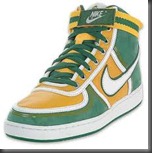
shoe-nikeNike does not hire the labor that works in the shoe factory. Those workers are hired from local pools of labor by the managers of that shoe factory. Those local workers need employment and are willing to work. Willing to work for $5-$10 per day. Those workers do not protest for vacation days. Generally. Those workers do not protest for health care, for dental plans, for eye care. Those workers do not protest for retirement plans. That is the fact on the ground. For the time being. We may see changes in labor in Southeast Asia over the next 5 years or so.

Yes, yes, you say, you know that. People work for 1/10th of the wages of an American. In the U.S., our Minimum Wage is $7.25 per hour. The minimum average wage in Viet Nam (2009) was $1 per hour for an 8-hour day.

Now, place yourself in the shoes of a business owner. You are going to pay the same transportation costs as your competitor. You are going to pay the same raw material costs as your competitor. Those are economic truths, not my truths. Raw materials like cotton, leather, rubber, etc. are traded on global markets. The global markets determine those prices. You and your competition, Reebok, Asics, New Balance, will be buying from the same pool of resources.

shoe-zombieYou can try to find better labor costs, however. If you were building shoes in the U.S. you were paying one employee $54.38 per day to build shoes. In Viet Nam, you could pay almost 7 workers for one day’s work for the same job, and arrive at the same product, with 7x’s as many shoes. And, as the case is, those workers are not yours, you do not have to worry about them. Remember? You are contracting with a factory in Viet Nam. You will pay that factory based on the shoes produced. In turn, that company will pay workers.


Your U.S. workers will cry “foul!” and complain, and protest, and picket your office.

You, on the other hand, will still employ people, designers, engineers, chemists, advertisers, salespeople, lawyers, accountants, etc. Plus, you will also indirectly employee people around the world. In other words, skilled employees that make decent money.

People who buy your shoes will be happy because they will still be able to afford to buy your shoes because you have managed to control the overall cost of your shoes.

Consumers, you and I, push companies to relocate to find cheap labor. When we buy devices, clothes, and shoes at Wal-Mart, or Target, or CostCo, we are telling Nike, Reebok, Levi, Lee, Magnavox, etc., we want cheap clothes and cheap electronics.

By preventing the movement of manufacturing jobs abroad, the cost of our clothes, shoes, DVD players, iPhones, Droids, XBoxes, LCD TVs, will all go up.

Yeah, but paying people high wages to assemble that stuff will put money in their pocket to buy those things!”

No, not really. Remember the cost of paying those American workers is going to be passed along to us, the consumer. If a company could save 90% of its labor costs by shifting the production to Viet Nam, and chooses not to, well, that is not really in the interest of the company, is it? That company is not maximizing capital, human capital, therefore not acting efficiently. The costs of labor will be passed along to us, the American consumer. Prices will inflate to match the increased cost of labor, thereby putting these devices, clothes, etc. out of reach of many people aka The Middle Class.

Another bad side effect is Inflation. If wages did go up, then companies tend to increase prices. Companies feel people can afford to pay more, since they are making more money. And, another economic “law” is that as the amount of something goes up, its value goes down. Put more dollars into circulation, the value of a dollar decreases and what you can buy with that dollar goes down.

Goes like this: Say all Americans gets a 20% pay increase. Sounds good, right? Wonder Bread, seeing this, thinks, oh wow, everyone is making more money now. Let’s sell a loaf a bread for $1.20, instead of $1.00. Wonder Bread bumps the price of bread up 20%, not because their costs increased, but because consumers can now afford to spend more.

No fair, that isn’t right! Wonder Bread just negated my raise because now my grocery bill just went up 20%! Government, you need to stop this!”

What are you, a Communist? Who are you to tell Wonder Bread how to run their business? What business is it of the government to tell Wonder Bread what they can charge for bread?

Maybe the good isn’t bread, it is a Blu-Ray player. Let’s revisit the earlier notion of passing along costs of production to the Consumer, you and I. For the sake of argument, consider from before the example of the U.S.-made Blu-Ray player versus an identical Blu-Ray player available from China.

The increase in cost of that Blu-Ray player from being made in the U.S. with U.S. wages now is $200 versus $150 for the China-made version. Now, if you are standing at Target, and two equal Blu-Ray players are shelved beside each other, and the U.S. Blu-Ray is $200, and the China Blu-Ray is $200, which one are you going to buy? You also think, if I save $50 I can go back and buy 5 of the Blu-Ray DVDs off the $10 rack.

History has already proven what Americans will do. That is why shoes are made in China, and TVs are made in China. In the 1970s and 1980s, Americans opted for the cheaper devices made in foreign countries over the same products made in the U.S.A.

Yeah, the government opened up the trade floodgates! It’s the damned <insert political party here> fault!". They are the ones who destroyed manufacturing!”

Yes, you are correct. The U.S. government opened trade with China, and Japan, and Taiwan, and Singapore, and India, and Bangladesh, and wherever. And, you benefited. You ran right out and bought that LG LCD TV, that XBox, that iPod Touch, that microwave oven. Or, your parent’s did; or, grandparents. Doesn’t matter. Americans saw the value of the products, the savings they were able to achieve, and how they could better use their money for other things.

Let me get this straight: you would rather pay an extra $50 for that Blu-Ray player to keep an American employed? In other words, you want the U.S. government to place a $50 dollar tariff on the China-made Blu-Ray player so that the cost is the same? $50 is a lot of money. Are you sure you would do that?

If you answered “Yes,” then you are advocating for government involvement of Labor, which is primarily a platform of the Democratic Party. Are you a Democrat? Then, you are also advocating for tariffs to protect domestic economics, throwing a wrench into Free Market economics, and that is a Socialist tenet. Are you a Socialist?

Listen to the news, and listen to political pundits from all parties. Politicians speak from all sides of their mouths. They want to keep costs down, yet prevent jobs from going off-shore, yet want to reduce education spending that builds a healthier economy. Right …

And, Americans seem to want it both ways, too. We want cheap phones, and cheap TVs, and cheap cars, and cheap whatever. Yet, we also claim to want good, high-paying jobs. Well, remember folks, that someone has to pay for that high-paying job, and that someone will be you and I.

Americans need to be aware of the repercussions of their “calls to action.” Like “fix unemployment!” or the cry for “we need jobs!” That is why you need to stay awake in Microeconomics and Macroeconomics; this is where we learn about these topics. But most of us are like, “man, these supply and demand curves are freaking boring.”

Yeah, well ignoring those Supply and Demand curves allow corporations and politicians to work their magic at our expense.

And, ignoring your math class allows corporations and politicians to run a numbers games against Americans as our ignorance grows.

We have jobs, 3.5 million that have gone unclaimed.

Those jobs have gone unclaimed, in part, because Americans do not pay attention to educating themselves to the Job Vacancies or Employment Growth Sectors. We educate ourselves for stuff that sounds fun. Like “Sports & Leisure,” or “Journalism,” or “English.” There is nothing wrong with those degrees in and of themselves. The U.S. doesn’t need them right now. We need computer programmers, nurses, health care workers, chemists, engineers, database managers. Those are good jobs. High paying jobs.

Educated people will always have a distinct advantage over those that have fewer skills or lack formal education.

As the Election Season begins, we will have to listen hard and well to sift through the BS from all sides. Take nothing said by anyone for granted. Do not fall victim to Confirmation Bias, believing what you hear or read from people who seem to think as you do. That is borderline Fascism.

Question.

m-Learning: The Child of eLearning


I’m sure most people under 65 have heard of “e-learning,” are so I hope. Perhaps not; “electronic learning,” or “e-learning,” refers to the use of technology for providing educational content. Not the same as “distance learning.” That, too, is a child of e-learning. Think of e-learning as an umbrella held by a parent. Distance learning, and m-learning, both crowd under the umbrella of Mother Education, along with e-learning.

E-learning refers to the use of Powerpoint, or perhaps an iPad, using Blackboard to take a course, the Internet to research a topic, or the use of in-class clickers for responding to a professor’s question. Anything that involves technology and educating one’s self.

Distance learning involves sitting at some remote, or distance, location from where the course or training is being hosted. Many universities offer online courses. I personally have had a few students take my world geography course from Arizona, New Jersey, North Carolina, and Iraq. Of course, distance does not mean to imply hundreds of miles away. More than 50% of my students simply sit in their residence hall, on campus, a few hundred yards away from my office, and take my online course. 300 yards is still “distance.”

M-learning I discovered today. I was reading an article discussing the pros and cons of telecommunication in Africa, the costs and benefits of cellular phones in Kenya, Nigeria, and South Africa. One of the benefits of cell phones in Africa is the delivery of educational content. Question: when the entire continent of Africa has less available bandwidth than Harvard or Yale University, how can educational content be efficiently delivered? An educational Purist might say that electronic learning is a luxury; pen, paper, and a textbook is all that one requires. And, a chalkboard.

iPhone Blackboard AppOK, maybe in the 1990s one could get buy with that. This is the 21st century. The Internet and smartphones are rapidly altering the landscape of education and commerce. To stay knowledgeable and on top of rapidly changing markets, people need skills and training, i.e. education. For Democracy and government to work, and function well, an educated populace is required.

M-learning refers to “mobile education,” the use of smartphones and telecommunication networks to provide information. M-learning works in places unreachable or not yet reached by hardwired networks.

Again, I pose the question: How can educational content be delivered in hard-to-reach locations, when running kilometers and kilometers of fibre optic is financially untenable, or social unrest makes work dangerous?

Countries like Nigeria, Kenya, and Tanzania are working to jump to the virtual and real technological hurdles of providing electronic content. Part of that content is education-based. Much like the HAM radio correspondence courses provided to distant stations in the Australian Outback, cellular technology and smartphones are helping to bridge the knowledge gaps around the world, from rural China, the rural United States, and Africa.

Further reading: “Leapfrogging in the Information Economy: Harnessing Information and Communications Technologies in Botswana, Mauritania, and Tanzania,” by Joseph O. Okpaku, Sr.

Tuesday, May 17, 2011

Book Review: Ropes of Sand, and, See No Evil

My new tattoo says, "through wisdom, strength." Only through questioning, wondering, researching with open minds can society overcome those elements that seek to undermine our lives. We have to release our egos, biases, judgments, and notions, let them go. As we distance ourselves from these hobgoblins, we can then see them for what they really are, and also the forces that drive them. OK, enough exposition, but there is a reason.

Both books follow a man's life living abroad, working for the United States government. Wilbur Eveland ("Ropes of Sand;" 1980) worked for the Central Intelligence Agency, when the agency was called the Office of Strategic Services. Eveland continued his intelligence career into the CIA. His autobiographical book covers his experiences as a CIA Section Chief in the Middle East.

Robert "Bob" Baer ("See No Evil;" 2002) provided the inspiration for the movie, "Syriana." George Clooney played the part of Baer, though in the movie his name was Bob Barnes. Bob Baer was perhaps one of the best CIA Case Officers during his time with the agency. Most people misunderstand the CIA. Spying is not precisely the business of the CIA. A CIA Case Officer finds local, indigenous people whom they can encourage to provide sensitive information. A Case Officer is like District Manager for Frito-Lay who manages the sales reps who take or deliver orders, keep customers happy, and file reports for the corporate offices. Human Intelligence is what this action is called, and falls within the directive of the National Clandestine Service (NCS), formerly known as the Directorate of Operations (DO) of the CIA.

Both of these autobiographical works share a common theme - the failure of U.S. policy-makers to recognize the importance of Knowledge.

Eveland exposes many policies supported not by facts or knowledge, but supported simply by the sheer will of a select number of people. One such "policy" was the creation of a Jewish Homeland. Today, people commonly assume that all Jews were in favor of the creation of Israel. The reality was much different. Zionist Jews, those that advocated for a Jewish Homeland, comprised less than 10% of the Jewish diaspora. Christians were far more interested in creating a Jewish Homeland than the Jews were, in total. Eveland's work is annotated, referenced, and indexed, creating a scholarly work for a life of intelligence-gathering, a career spanning the end of World War II until Vietnam. {For further reading about this, consult "The Israel-Arab Reader," "Righteous Victims," and "Power, Faith, and Fantasy."}

Baer may have worked with Eveland, as both were Middle East operatives. Not only do their careers overlap, but Eveland was a CIA Section Chief in the Middle East, and Baer was a CIA Case Officer in the Middle East. Baer's job was to find local people who had government positions that were "unhappy" or "concerned" that his/her government was not behaving correctly. These disgruntled individuals, "human intelligence," (HUMINT) would be cultivated into providing information, considered sensitive, to Bob, which he would then pass along to a Section Chief or the Pentagon. New-gained knowledge would then be used to sculpt U.S. foreign policy, used to keep foreign governments honest, or perhaps be used to overthrow a government.

Baer's book is a quick, exciting albeit uncomfortable read. Uncomfortable in the sense that he quickly outlines how diplomacy and satellites replaced boots-on-the-ground, real human-gathered intelligence. He essentially makes the point that satellites and hand-shaking ambassadors, all the while ignoring HUMINT, and closing CIA offices around the world, led to ineffectual data-collection. The absence of human intelligence allowed organizations such as al-Qaeda to develop and mature. The cannibalization of the CIA by the Department of State (diplomats) and the Federal Bureau of Investigation (FBI), neither of which allegedly has the background or experience in running intelligence operations in foreign countries, created a vacancy of knowledge in which al-Qaeda, et. al., flourished.

The world, in spite of sleek iPhones, XBoxes, and Kindles, is an ugly, dirty place. Satellites, fantastically cool technology, should augment HUMINT, not replace HUMINT. Bob argues that replacing field agents with desk-jockey analysts who never put boots-on-the-ground is like making the restaurant manager the Head Chef – that one can be a chef simply because one knows the restaurant business does not follow. We have seen how terrorists defeat technology from horseback or bicycles, setting up Pony Express-style courier systems and hand-delivering messages and materials.

Without elaborate networks of "friendly" people, the world will continue to be a playground for those who decide to play with an alternate set of rules. The management of HUMINT assets requires people who speak languages, Arabic, Russian, Chinese, Farsi, and French, can work "outside the box," and can read people, environments, and situations. However, the networks are of no use if the policy-makers, in their own arrogance, prefer their own counsel.

Listen to legislators, people running for office, or government employees who denigrate the CIA. That person is probably an intelligence failure waiting to happen. Anyone who criticizes the inclusion of foreign languages in Primary or Secondary Education is also a diplomatic and/or intelligence failure. In order to have intelligent thoughts about the world, we have to act in intelligent ways. The only way I know to accomplish this is through the promotion of Education. A little bit of education helps, and more education is always better.

Finally, both authors also suggest that diplomacy has been undermined by global energy interests. Perhaps "infiltrated" might be a better word. Oil and Natural Gas companies drive much of the world's politics. These companies have lobbyists who constantly follow lawmakers. These companies find ways of subverting U.S. or foreign law to work abroad. To which companies do I refer? Name any; no matter. They are all guilty.

"See No Evil" I recommend simply because the events are within most reader's generation, and may have some memory of. Many names may be recognizable. Many events described were memorable - the bombing of the Marine barracks in Beirut (1983) or the Lockerbie Bombing (1988.) The Lockerbie Bombing (PanAm 103) may have actually been planned in Iran, though Libya was blamed.

I personally would not be surprised if some within the Iranian government, or perhaps the Pakistani ISI, were involved in 9/11.

Shutting down knowledge-gathering efforts, out of fear, out of arrogance, or cultural egotism has proven to be a dangerous, deadly, tragically costly and grievously short-sighted mistake. Knowledge coupled with living experience is power and cannot be replaced with technology. At least, not yet. Augmented with technology, yes. But seeing people eye-to-eye, reading body language, skiing, hunting, fishing, and eating with them, that is how we learn what lies ahead.